The Most Unlikely Cargo Aircraft in History: the Aero Spacelines Super Guppy
Before the Beluga and the Dreamlifter, there was the Super Guppy. A cargo aircraft with a completely out-of-the-ordinary look, a true flying bubble designed for one very specific mission: transporting oversized parts that nothing else could easily carry.
Why the Super Guppy Became an Icon
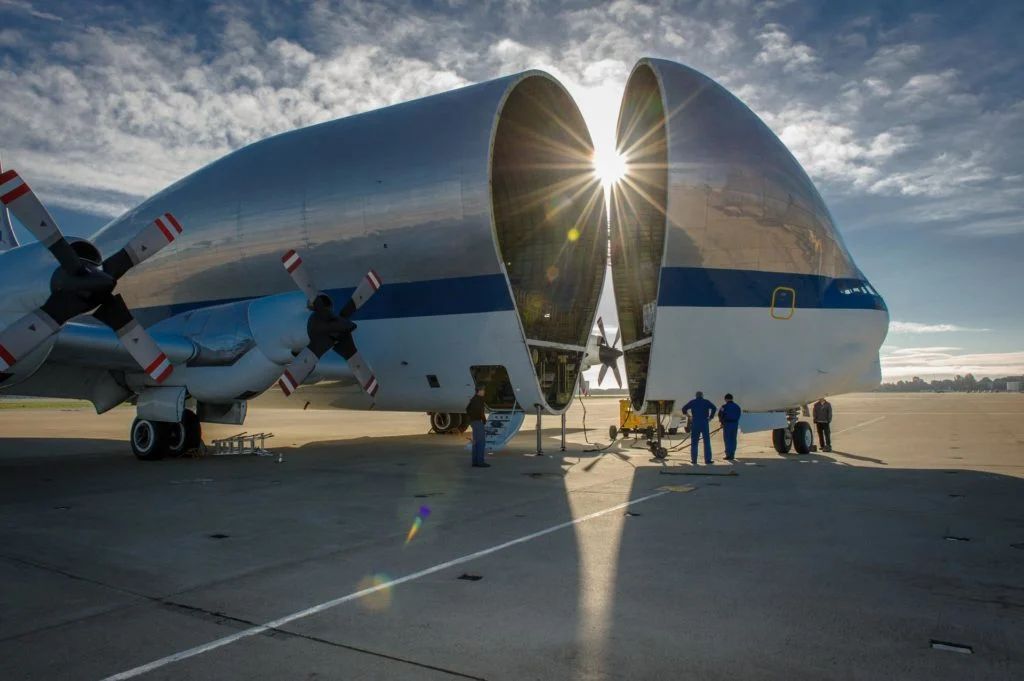
It was designed as a simple answer to a complex problem: moving bulky elements, particularly for space programs, without depending on roads, exceptional convoys or heavy infrastructure. Born from the ingenuity of Aero Spacelines on the Boeing 377/C-97 airframe, the Super Guppy was designed to transport the second stage of the Saturn rocket for the Apollo program. The last active aircraft still flies under NASA colors today.
A Spectacular Feature
A giant fuselage section and a cargo access designed to load large volumes, where a conventional aircraft would be immediately limited. A few cargo compartment reference figures: width 7.62 m, height 7.62 m, length 33.8 m, with a maximum payload exceeding 23.6 tonnes.
What It Still Reminds Us of Today
In air freight, innovation is always born from constraints. When a client has an impossible part, a tight timeline, or an oversized need, the solution is never standard: it is built with the right aircraft, the right expertise and the right coordination. At Dynami Aviation OPS, this is exactly our everyday business: finding the right air solution, even when the requirements go beyond the norm.
Have an Oversized Part to Transport?
Contact our team to discuss the most suitable air solution for your out-of-the-ordinary project.
Frequently Asked Questions About the Super Guppy and Oversized Freight
What is the Super Guppy?
The Super Guppy is a cargo aircraft with an extremely voluminous fuselage, developed by Aero Spacelines on the Boeing 377/C-97 airframe, designed to transport oversized parts that nothing else could easily carry, particularly for space programs.
Is the Super Guppy still flying today?
Yes, the last active aircraft still flies under NASA colors, several decades after its original design.
What were the cargo compartment dimensions of the Super Guppy?
The cargo compartment measured about 7.62 meters wide, 7.62 meters high and 33.8 meters long, with a maximum payload exceeding 23.6 tonnes.
What program was the Super Guppy originally designed for?
It was designed to transport the second stage of the Saturn rocket for the Apollo space program, a mission that required cargo access capable of accommodating exceptional volumes.
What connection exists between the Super Guppy and aircraft like the Beluga or Dreamlifter?
The Super Guppy is considered the precursor of this category of extra-wide-fuselage cargo aircraft, before the Airbus Beluga and the Boeing Dreamlifter, all designed to address the same challenge: transporting oversized parts.
What does the Super Guppy teach us about oversized freight charter today?
It reminds us that innovation in air freight is always born from constraints: when a client has a part that seems impossible to transport or an oversized need, the solution cannot be standard, it must be built with the right aircraft, the right expertise and the right coordination.