Transporting Oil Equipment: When Every Hour of Downtime Costs Dearly
In Oil & Gas, the challenge is not just transporting cargo. It is maintaining production, securing operations, and delivering critical parts to the right place at the right time, often in isolated areas, offshore, or with limited infrastructure.
What We Transport Most Often
Drilling parts (tools, drill pipe, BHA, wellhead components), industrial equipment and critical spares (pumps, compressors, generators, valves, turbine parts), and mission-critical material for platforms and living quarters.
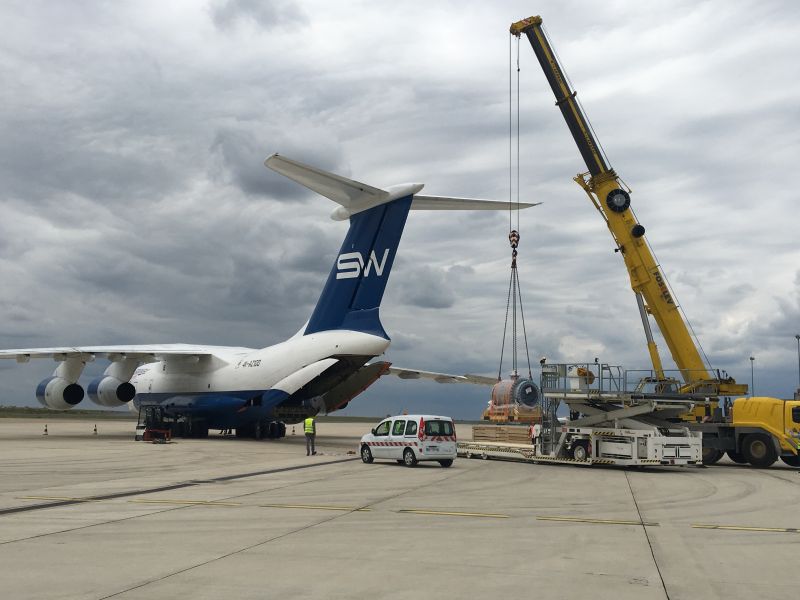
The real challenges of oil and gas by air: oversized and heavy loads (dimensions, center of gravity, lashing, loading plan), ultra-short deadlines (a missing part can ground a team or facility), DG compliance (lithium batteries, chemicals, pressurized equipment, customs), and complex access (secondary airports, runway constraints, weather, multi-site coordination).
Dynami Aviation OPS's Role
We act as the conductor between operator, EPC, freight forwarder, airline, handling and authorities: selecting the right aircraft according to volume, weight and destination, technical preparation (loading plan, lashing, door and hold constraints), managing DG compliance and customs permits, and 24/7 time-critical execution when production cannot wait.
A Range of Aircraft Suited to Heavy Loads
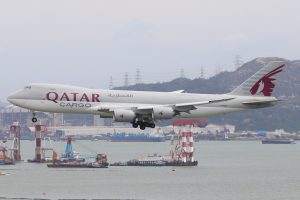
Depending on the mission, aircraft such as the AN-12, the IL-76, the AN-124 Ruslan or the Boeing 767F are commonly mobilized to meet the volumetric and weight needs specific to the Oil & Gas sector.
Have a Critical Part to Deliver to an Oil & Gas Site?
Because in Oil & Gas, logistics reliability is an operational advantage. Contact our team.
Frequently Asked Questions About Oil Equipment Air Transport
What types of oil equipment are transported by air?
Drilling parts (tools, drill pipe, BHA, wellhead components), industrial equipment and critical spares (pumps, compressors, generators, valves, turbine parts), and mission-critical material for platforms and living quarters.
What are the main challenges of air transport for Oil & Gas?
Oversized and heavy loads (dimensions, center of gravity, lashing), ultra-short deadlines, DG compliance (lithium batteries, chemicals, pressurized equipment), and complex access to secondary airports or offshore areas.
What aircraft are used to transport heavy oil equipment?
Depending on volume, weight and destination, aircraft such as the AN-12, the IL-76, the AN-124 or the Boeing 767F are commonly mobilized for this type of mission.
Why is reactivity so critical in the Oil & Gas sector?
A missing part can ground an entire team or facility, at considerable operational cost. This is why 24/7 time-critical execution is essential when production cannot wait.
What is Dynami Aviation OPS's role in an Oil & Gas mission?
We act as the conductor between operator, EPC, freight forwarder, airline, handling and authorities: selecting the right aircraft, preparing the technical loading plan, managing permits and compliance, and executing quickly.
Does air transport for Oil & Gas only concern offshore platforms?
No. It concerns isolated areas and limited onshore infrastructure just as much as offshore platforms, with each configuration requiring specific adaptation of the logistics plan.